Tell us about the job
Takes about a minute. No obligation.
A contractor called out for boiler repair in this area starts by looking at what the system has been carrying, not just what finally stopped it. 211 severe weather events were recorded in Pulaski County, Kentucky between 2015 and 2024. At that rate, severe weather is a standing condition here, and the heat exchanger, seals, and venting take the brunt of it season after season. By the time a boiler fails, those components have a history a contractor can see and measure. That is where the diagnostic starts, and often where the repair bill is decided.
Boilers in housing stock this seasoned carry a layered repair history. Half the homes in Pulaski County, Kentucky were built in 1986 or earlier (2020-2024 ACS 5-year). A system that has passed through several sets of hands over that span is likely to hold mismatched components, non-original fittings, or repairs done to whatever was available at the time. When a contractor opens a unit here, the question is whether the part that failed is still manufactured in a form that fits what surrounds it, or whether the surrounding assembly has drifted far enough from its original spec that a standard replacement no longer seats correctly. That answer determines the scope of the job.
The Parts of a Boiler a Contractor Checks First
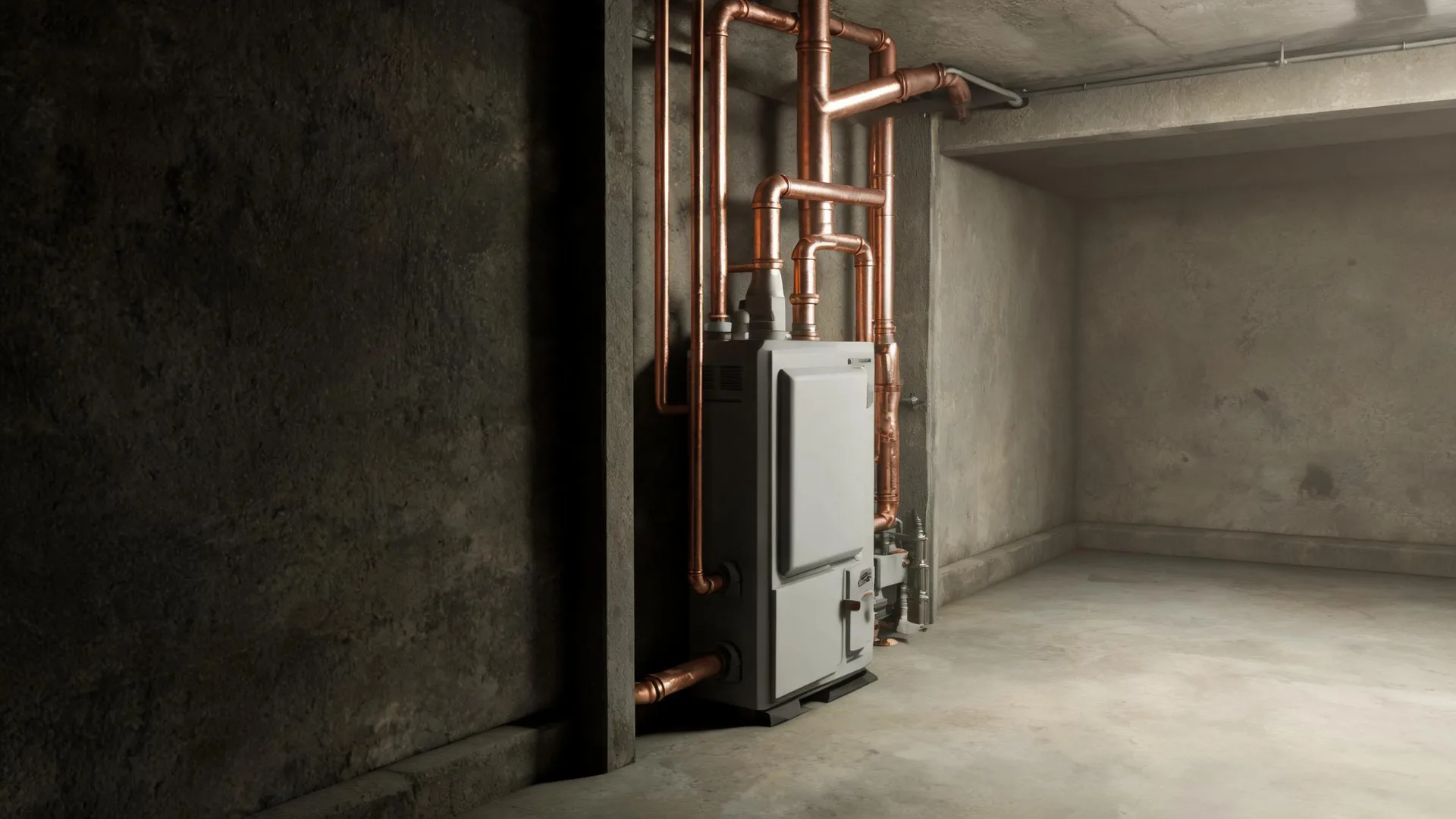
The boiler itself sits in the basement or a utility room and is the heart of the system. It heats water and pushes it out through the pipes. When a boiler short-cycles, makes noise, or stops producing heat, the contractor starts here, looking at the heat exchanger, the burner assembly, and the pressure relief valve.
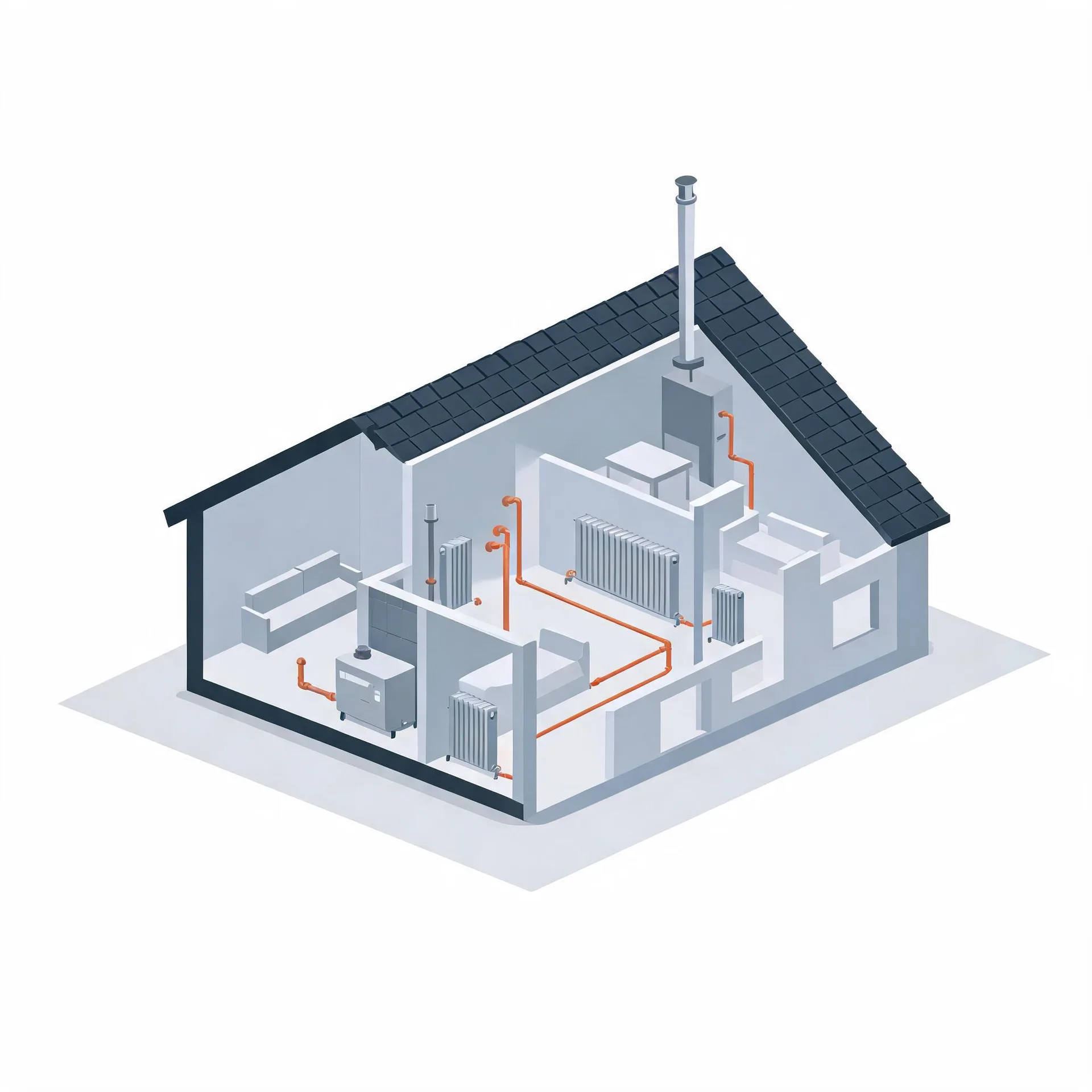
The circulator pump moves hot water through the pipes to the radiators or baseboard units spread through the living spaces. The expansion tank, usually hanging near the boiler, keeps system pressure stable. A failed pump means rooms stay cold even when the boiler fires; a waterlogged expansion tank shows up as pressure swings the gauge makes plain.
The drawing shows a typical boiler system layout, and a licensed contractor determines which components apply to your specific setup.
Get matched in Pulaski CountyPulaski County, by the numbers
211 severe weather events were recorded in Pulaski County, Kentucky between 2015 and 2024.
NOAA National Centers for Environmental Information, Storm Events Database, bulk CSV export, events 2015-01-01 through 2024-12-31.Half the homes in Pulaski County, Kentucky were built in 1986 or earlier (2020-2024 ACS 5-year).
U.S. Census Bureau, 2020-2024 American Community Survey 5-Year EstimatesPulaski County, Kentucky holds 31,722 housing units (2020-2024 ACS 5-year).
U.S. Census Bureau, 2020-2024 American Community Survey 5-Year EstimatesOwners occupy 72.5% of the occupied homes in Pulaski County, Kentucky (2020-2024 ACS 5-year).
U.S. Census Bureau, 2020-2024 American Community Survey 5-Year EstimatesCodes & Standards Covering Boiler Repair in Pulaski County, Kentucky1 sourced rules and standards
Licensing Rules for HVAC Repair in Pulaski County, Kentucky
Kentucky requires a licence to practise heating, ventilation and air conditioning contracting: a person may not do the work unless they have met the state licensing requirements.
Severe Weather Events in Pulaski County
Extreme weather puts real stress on boiler systems, from hard freezes that push heating loads to sudden swings that force equipment to cycle harder and more often. How much of that pressure a boiler in Pulaski County faces is a local question, and local data gives it a local answer.
211 severe weather events, 2015–2024. Source: NOAA National Centers for Environmental Information, Storm Events Database.