Tell us about the job
Takes about a minute. No obligation.
A contractor sizing a boiler replacement in Clay County is solving for the building's heat loss and the equipment's history, not for a climate that batters systems into early failure. 75 severe weather events were recorded in Clay County, Kentucky between 2015 and 2024. At that rate, severe weather is an event here rather than a standing condition, which means worn heat exchangers, undersized original installs, and deferred maintenance are the explanations a contractor looks for first. A quote that treats local weather as the primary driver of wear is reaching for the wrong answer.
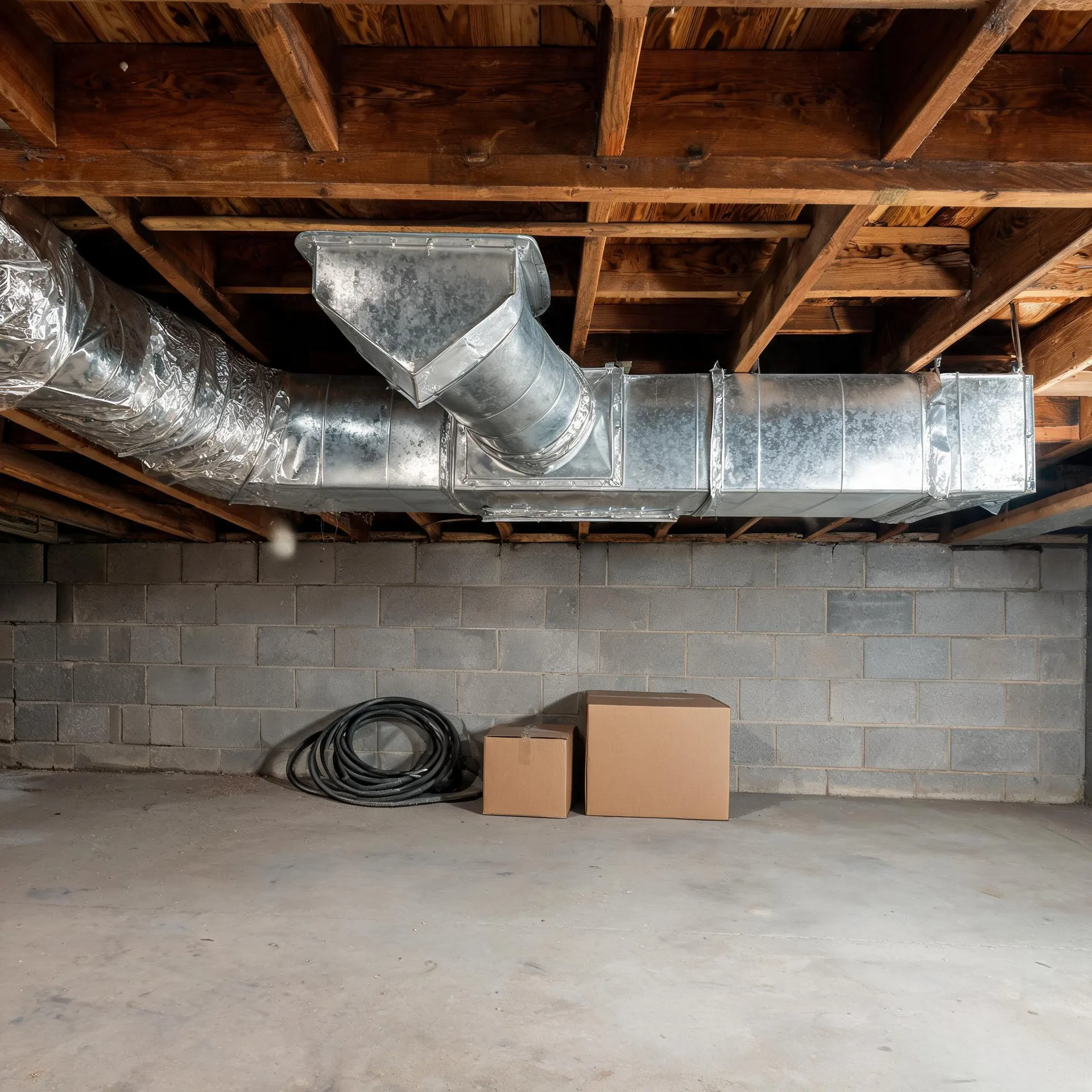
Ductwork sized and routed for equipment that has not been manufactured in decades is what a contractor runs into in a significant share of Clay County homes. Half the homes in Clay County, Kentucky were built in 1989 or earlier (2020-2024 ACS 5-year). That gap between the building's original design and what a modern boiler actually needs is where the installation either holds or breaks down. The duct runs, their dimensions, and how they connect to the distribution points all get checked before anything else is priced, because a system quoted without that inspection is a system quoted against the wrong house.
What a Boiler Installation Puts in Your Home
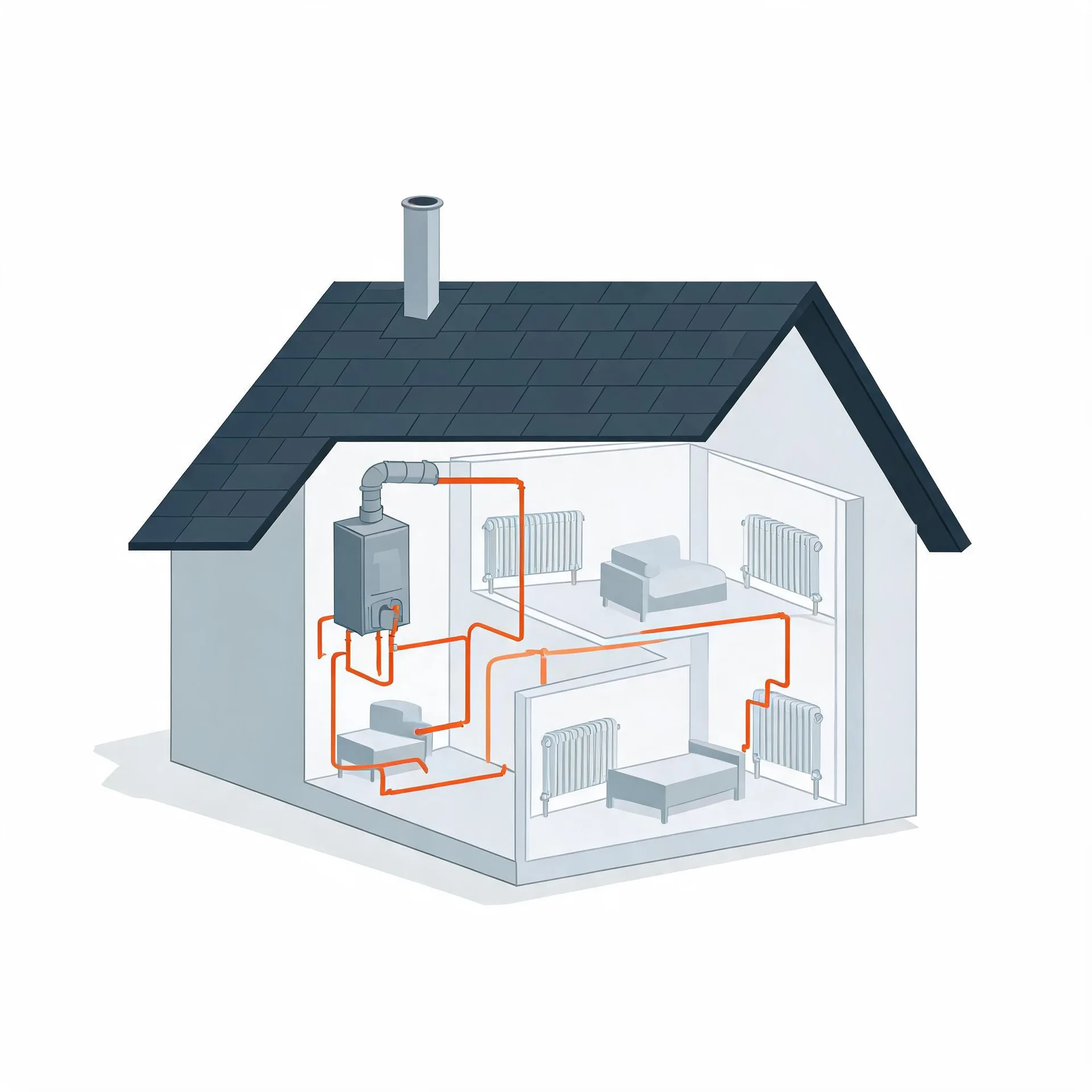
The boiler itself sits in a mechanical room, basement, or utility closet and is the unit that heats water for the whole system. A contractor mounts it against a wall or on the floor depending on the model and the space available. The flue pipe runs from the boiler to an exterior wall or through the roof to carry combustion gases out of the house.
From the boiler, supply and return pipes run through the walls and floors to the heat emitters, which are either radiators standing against the walls of each room or radiant tubing laid beneath the floor. A circulator pump, mounted on the piping close to the boiler, moves the heated water through that loop. The expansion tank, usually hanging from a pipe near the boiler, absorbs pressure changes as the water heats and cools.
The drawing shows a typical boiler layout, and a licensed contractor determines exactly what applies to your house and its existing conditions.
Get matched in Clay CountyClay County, Kentucky, by the numbers
75 severe weather events were recorded in Clay County, Kentucky between 2015 and 2024.
NOAA National Centers for Environmental Information, Storm Events Database, bulk CSV export, events 2015-01-01 through 2024-12-31.Half the homes in Clay County, Kentucky were built in 1989 or earlier (2020-2024 ACS 5-year).
U.S. Census Bureau, 2020-2024 American Community Survey 5-Year EstimatesClay County, Kentucky holds 8,664 housing units (2020-2024 ACS 5-year).
U.S. Census Bureau, 2020-2024 American Community Survey 5-Year EstimatesOwners occupy 76.4% of the occupied homes in Clay County, Kentucky (2020-2024 ACS 5-year).
U.S. Census Bureau, 2020-2024 American Community Survey 5-Year EstimatesBoiler Installation Rules for Clay County, Kentucky1 sourced standards and codes
Licensing Rules for HVAC Work in Clay County, Kentucky
Kentucky requires a licence to practise heating, ventilation and air conditioning contracting: a person may not do the work unless they have met the state licensing requirements.
Severe Weather Events in Clay County
Boiler sits in a part of Kentucky where weather puts real demands on heating equipment. A boiler sized and installed for local conditions holds up better than one spec'd without it.
75 severe weather events, 2015–2024. Source: NOAA National Centers for Environmental Information, Storm Events Database.